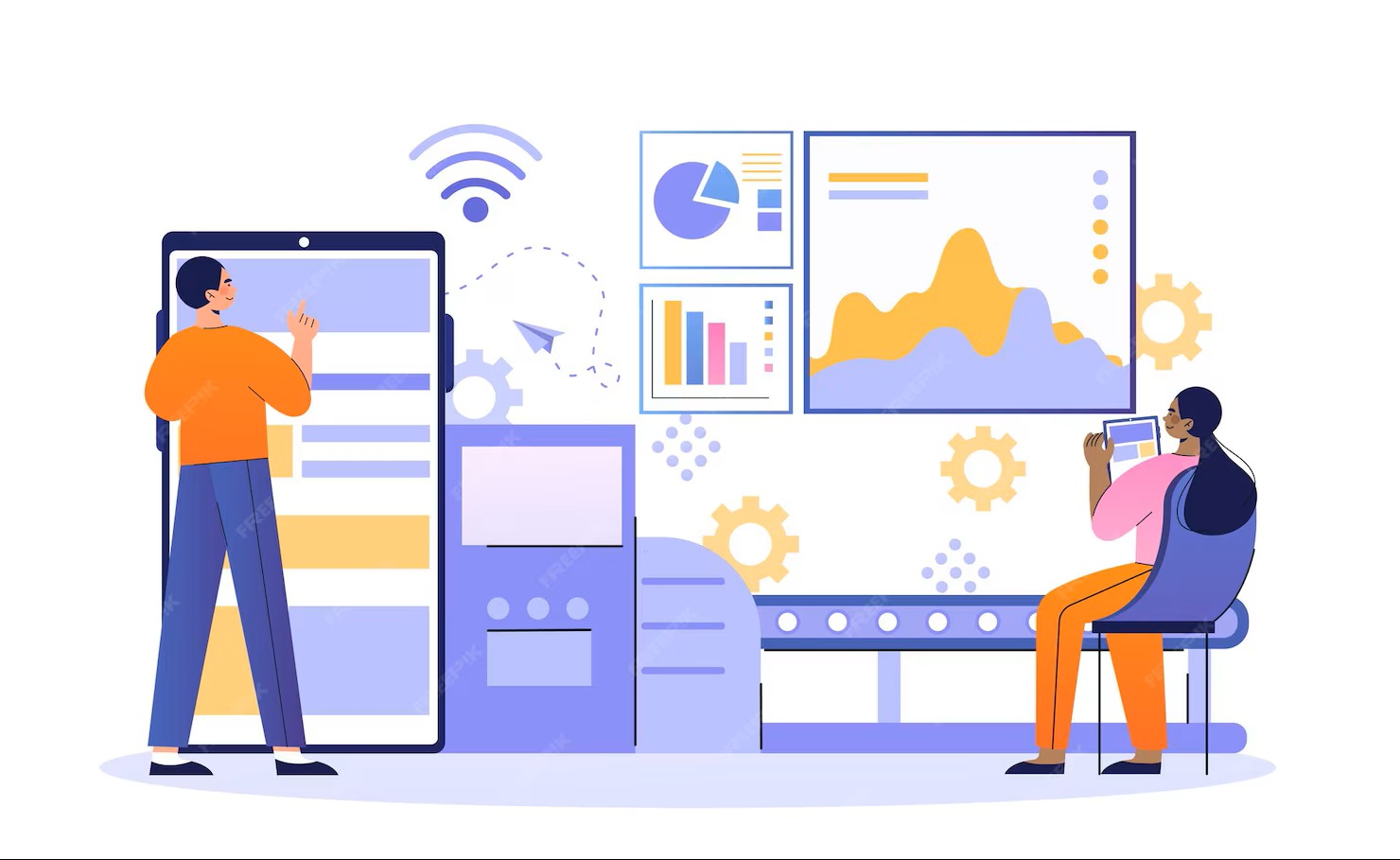
The manufacturing landscape has reached a tipping point: after a long time of counting on reactive models—solving machines best after failures and checking stock best whilst shipments were missed—the margin for mistakes has all however disappeared via 2026. Today’s maximum successful manufacturers have shifted to proactive operations, driven through actual-time visibility, that’s now not a nice-to-have software program feature but the core capability separating market leaders from companies struggling to survive.
What “Lack of Visibility” Really Means
Many manufacturers believe they’ve a handle on their statistics because they get hold of weekly or monthly reports. In fact, counting on trailing information is like looking to force a automobile whilst most effective searching within the rearview mirror.
When a business lacks actual-time insight, the results are felt across the whole deliver chain:
- Decisions Based on Outdated Reports: If your production meeting on Wednesday is based on data from last Friday, you aren’t managing your current reality—you’re managing a ghost.
- Limited Insight into Production Costs: Without a clear view of hours and material scrap rates as they happen, actual process costing becomes guesswork. This ends in shrinking margins that often go unnoticed until the end of the quarter.
- Delayed Response to Disruptions: Whether it’s an overdue supplier shipment or a surprising device failure, a lack of visibility manner by the time you comprehend there is a problem, it’s frequently too overdue to mitigate the effect.
How High-Performing Manufacturers Operate
High-performing manufacturers don’t just work harder; they work smarter by leveraging platforms like NetSuite ERP. They treat data as a living asset. By integrating every facet of the business—from the shop floor to the back office—these companies gain a “single version of the truth.”
1. Monitoring the Triple Threat
Top-tier operators screen manufacturing, inventory, and call for concurrently. If a spike in demand occurs inside the Northeast area, the manufacturing team sees it right away and can regulate schedules before stock hits an important low.
2. Acting Before Escalation
Real-time visibility allows for “control by using exception.” Instead of reviewing each single process, managers are alerted most effective when a KPI falls outside of a set threshold. This permits them to pivot and solve a bottleneck in mins instead of days.
3. Aligning Operations with Finance
In many legacy structures, the warehouse and the accounting branch talk different languages. High performers use Oracle NetSuite to ensure that each pallet moved and every hour worked is without delay meditated inside the economic ledger. This alignment ensures that operational decisions are usually grounded in fiscal reality.
Why 2026 Changes the Game
If visibility was important five years ago, it is mandatory now. The year 2026 has brought about a unique set of challenges that have made “lagging data” a liability.
- Increased Complexity: Modern products are extra custom than ever, requiring complicated Bills of Materials (BOMs) and tricky assembly steps.
- Supply Chain Volatility: Global logistics remain sensitive. The ability to see a delay in a raw material shipment in actual-time lets in manufacturers to re-collection production runs without losing a day of work.
- Cost Pressure: With fluctuating strength costs and personnel shortages, producers want to optimize every square inch of their ground area. You can’t optimize what you cannot see.
How NetSuite Enables Real-Time Visibility
This is where Oracle NetSuite becomes the backbone of the modern factory. Unlike disparate systems that require manual data entry and “Excel gymnastics” to join together, NetSuite ERP provides a unified cloud-based platform.
A Single Data Model
The power of NetSuite lies in its architecture. Because it uses a single data model, information isn’t “sent” from one department to another—it simply exists across the entire organization simultaneously. When a sales rep closes a deal, the production planner sees the demand, and the CFO sees the projected revenue in one seamless loop.
Live Dashboards vs. Periodic Reports
Static spreadsheets are a factor of the beyond. NetSuite gives position-primarily based dashboards that update in real-time. A floor manager sees machine uptime, at the same time as an executive sees global profitability—both pulling from the same live records stream.
Faster Decision Cycles
By removing the “data silos” that plague traditional manufacturing, teams can move faster. Decision cycles that used to take weeks of meetings are reduced to minutes because everyone is looking at the same live screen.
Conclusion
In these day’s current industrial world, agility is the most effective actual safety—when you could see problems coming, you could keep away from them, and while you can spot possibilities early, you may capture them. Manufacturers that embrace actual-time visibility with Oracle NetSuite continuously outperform the ones counting on lagging records, carrying much less protection inventory, attaining better profit margins, and building more potent customer relationships through reliable transport dates. As 2026 techniques, the selection is obvious for manufacturers: benefit visibility or risk turning into invisible for your customers.